Best Low Calorie High Protein Meals for Busy Professionals

Written by: Marc Howland, Co-Founder and CEO, Breadless | Last updated: July 6, 2026
Key Takeaways
- Workday meals work best when they deliver 300–500 calories and 25–40 g of protein in a portable, one-handed format that keeps blood sugar steady.
- Conventional sandwiches and high-glycemic lunches spike insulin, clear glucose too quickly, and trigger the 2 p.m. crash.
- Supergreen wraps with Swiss chard or collard greens remove empty bread calories and add fiber, potassium, and antioxidants.
- Breadless meals give busy professionals low calories, high protein, full gluten-free preparation, and true one-handed usability.
- Skip the afternoon slump and fuel your focus. Find a Breadless location near you for convenient, high-protein lunches built for your schedule.
Problem: The 2 p.m. Crash and Why Conventional Lunches Fail
The mid-afternoon energy dip is a documented physiological event. Franciscan Health identifies the post-lunch blood sugar spike and subsequent insulin response as a primary driver of the 2–3 p.m. cognitive slump, a window that directly overlaps with peak afternoon work demands. MyHealthChecked notes that meals high in refined carbohydrates accelerate this cycle by producing rapid glucose spikes followed by sharp drops that impair concentration and reaction time. Everlab further links the afternoon slump to elevated adenosine accumulation and circadian rhythm dips that are significantly worsened by high-glycemic meals.
Conventional sandwiches sit at the center of this problem. Two slices of standard bread contribute 150–220 empty calories with a high glycemic index, low micronutrient density, and minimal fiber relative to their carbohydrate load. This combination produces a rapid insulin spike that clears blood glucose faster than the body can compensate. The result is lethargy and brain fog that push professionals into a caffeine cycle by mid-afternoon.
Supergreens such as Swiss chard and collard greens score a maximum 1,000 on the Aggregate Nutrient Density Index (ANDI), compared to near-zero for bread or iceberg lettuce. Using these greens as the meal vessel removes the glycemic trigger and adds fiber, potassium, magnesium, and antioxidants that support vascular health and cognitive function.
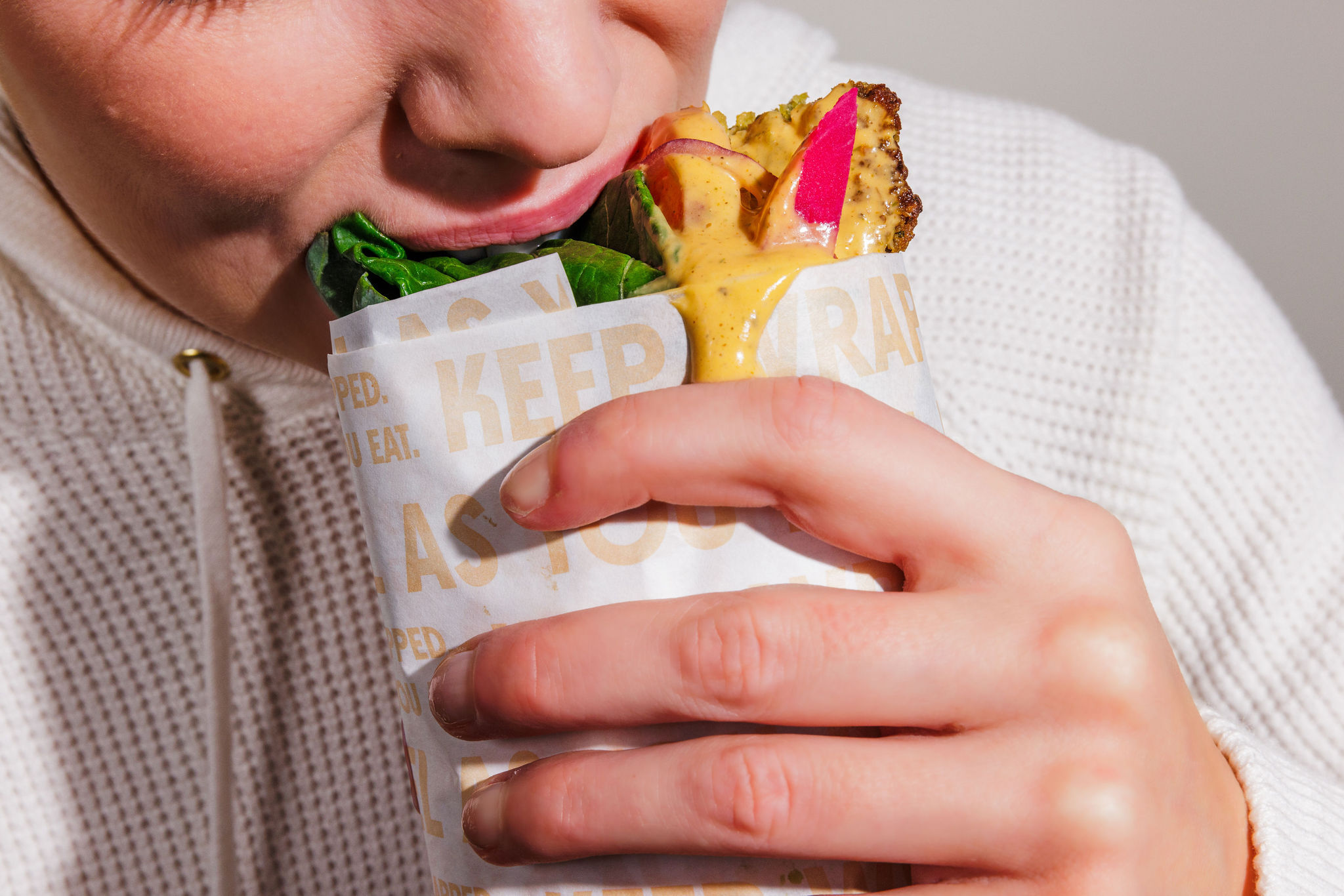
Solution: High-Protein Lunch on the Go
The physiological case for supergreen wraps aligns with a broader shift in consumer behavior. The share of Americans focused on consuming more protein rose from 59% in 2022 to 71% in 2025, and the market is responding to that demand with portable, high-protein formats. The global high-protein foods market is projected to grow from $61.46 billion in 2026 to $117.44 billion by 2034 at a CAGR of 8.4%, driven largely by on-the-go options. The global protein snacks market is projected to reach nearly $9 billion by 2030, with busy professionals identified as a core consumer segment.
The comparison below highlights a key pattern. Most high-protein lunches force a tradeoff between calorie control and portability. Supergreen wraps deliver strong protein, sub-300 calories, and true one-handed usability in a way bowls, salads, and many meal-prep options do not.
| Meal | Calories | Protein (g) | One-Handed |
|---|---|---|---|
| Breadless Jerk Chicken & Mango (supergreen wrap) | 280 | 28 | Yes |
| Breadless BBQ Braised Beef (supergreen wrap) | Low-cal | High-protein | Yes |
| Sweetgreen Harvest Bowl | 705 | 34 | No |
| Cava Greens & Grains Bowl (w/ Grilled Chicken) | 677 | 33 | No |
| Saladworks Chicken Caesar Salad (w/ Dressing) | 390 | 32 | No |
| Greek yogurt + hard-boiled eggs (meal prep) | ~300 | ~28 | Partial |
| Protein bar (avg. leading brand) | ~220 | ~20 | Yes |
| Chicken and rice bowl (homemade) | ~480 | ~38 | No |
Breadless macro data sourced from company nutritional information. Sweetgreen Harvest Bowl and Cava Greens & Grains Bowl data sourced from company nutritional information. Saladworks Chicken Caesar data sourced from company nutritional information. Meal prep and protein bar estimates are representative averages.
The one-handed column is the decisive differentiator. Bowls and salads require a fork, a flat surface, and undivided attention, which rarely exist during a walking meeting, a commute, or a sprint between calls.

Ready to skip the fork and the crash? Order a supergreen wrap for pickup and see how one-handed eating can still deliver serious protein.
Problem: Salad Inefficiency for Desk and On-the-Move Professionals
Salads offer strong micronutrients and reasonable protein when built correctly, yet their format clashes with a 50-hour workweek. Eating a salad at a desk requires a bowl, a fork, and the focus to avoid dressing on a keyboard. Eating one in a car or between meetings rarely works in practice.
Lettuce wraps from legacy sandwich chains attempt to fix this but fall short on structure. Iceberg lettuce, the standard vessel, is mostly water, scores near zero on the ANDI, and collapses under typical fillings. The result is a product that lacks portability and meaningful nutrition.
Breadless uses a proprietary preparation process for Swiss chard and collard greens that creates a durable, non-soggy vessel that holds all ingredients through a commute, a meeting, or a one-handed lunch at a standing desk. The wrapper itself adds micronutrients instead of empty calories, turning a structural filler into a functional part of the meal.
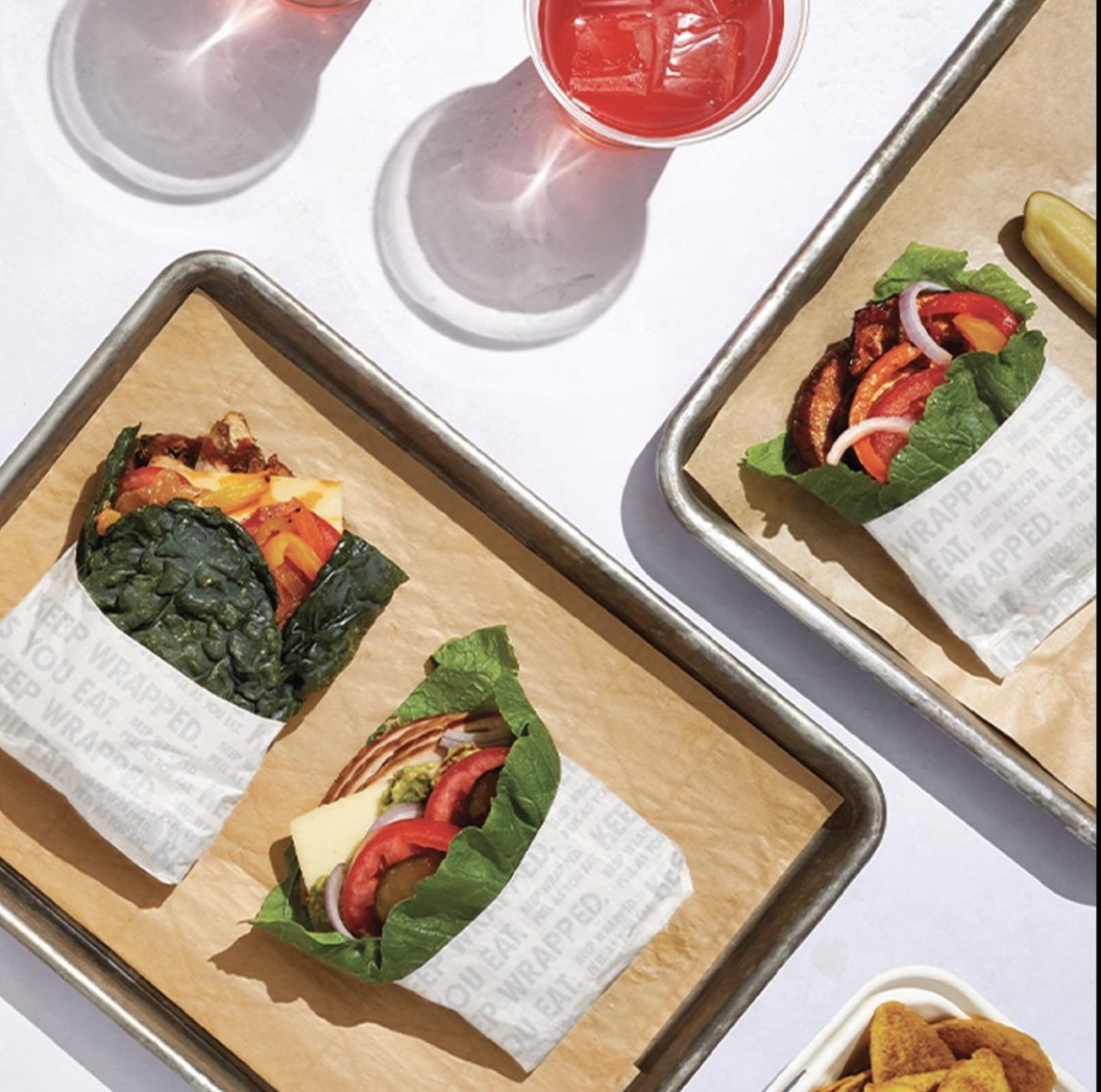
Solution: Low-Calorie High-Protein Meals on a Budget
The World Health Organization recommends limiting free sugars, reducing saturated fats, and emphasizing fruits, vegetables, legumes, and lean proteins. A practical workday plan that follows these guidelines can stay simple and affordable without subscriptions or complex recipes.
The following 15-minute-or-less meal prep staples provide 300–500 calories and 25–40 g of protein per serving, arranged from fastest to most protein-dense.
- Greek yogurt and egg white bowl: 1 cup plain Greek yogurt, 3 egg whites scrambled, berries. ~310 cal, ~35 g protein. Prep: 7 minutes. This option is the fastest and delivers the highest protein per serving.
- Collard green turkey wraps: 2 large collard leaves, 4 oz sliced turkey breast, avocado, mustard. ~290 cal, ~28 g protein. Prep: 8 minutes. The collard vessel adds more micronutrients than the yogurt bowl but needs slightly more prep.
- Swiss chard chicken wraps: 2 Swiss chard leaves, 4 oz grilled chicken, salsa, shredded cabbage. ~270 cal, ~30 g protein. Prep: 10 minutes. This variation uses Swiss chard and works well if you batch-cook chicken for the week.
Professionals who prefer not to prep can rely on Breadless menu items at accessible fast-casual price points, with mobile order and pickup that remove wait time from the day.
Compare the prep time to the pickup time and mobile order a Breadless wrap to reclaim your Sunday afternoons.
Problem: Dietary Restrictions and GLP-1 Medication Challenges
Three dietary restriction categories create compounding lunch challenges for professionals. Celiac disease requires a fully gluten-free kitchen environment, not just gluten-free menu items, which most fast-casual restaurants cannot provide because bread is present throughout operations. Type 1 and Type 2 diabetics face hidden carbohydrate loads in meals marketed as healthy, including whole-grain wraps, rice bases, and sweetened dressings. GLP-1 medication users experience appetite suppression that reduces total food intake, so every calorie must carry more protein and micronutrients to prevent muscle loss.
Standard fast-casual options miss the mark for all three groups. A bowl with a grain base can contain 40–65 g of net carbohydrates. A traditional wrap adds 30–45 g from the tortilla alone. Neither format is reliably gluten-free, and neither suits the small-volume, high-density nutritional needs of a GLP-1 user.
Solution: GLP-1 Friendly Options
Breadless keeps its entire menu naturally gluten-free by design. No bread enters the kitchen, so cross-contamination risk drops to zero. This distinction matters because it has long been estimated that 1 in 133 Americans have celiac disease, and recent screening studies suggest the true prevalence may be higher than 1%. Those with celiac disease cannot safely rely on “gluten-free options” at bread-based restaurants.
The macro comparison below exposes the hidden cost of grain-based meals. Even “healthy” bowls from premium chains deliver 2–3 times the calories and carbohydrates of a supergreen wrap while offering nearly identical protein. For GLP-1 users working within a 1,200–1,600 calorie daily budget, that efficiency gap can separate adequate protein intake from muscle loss.
| Restaurant & Item | Calories | Protein (g) | Net Carbs (g) |
|---|---|---|---|
| Breadless – Jerk Chicken & Mango | 280 | 28 | 13 |
| Sweetgreen – Harvest Bowl | 705 | 34 | 55 |
| Cava – Greens & Grains Bowl (w/ Grilled Chicken) | 677 | 33 | 36 |
All figures sourced from each restaurant’s published nutritional information. Net carbs calculated as total carbohydrates minus dietary fiber.
The Breadless Jerk Chicken & Mango provides similar protein to both competitors at less than half the calories and a fraction of the net carbohydrates. For a GLP-1 user eating 1,200–1,600 calories per day, that ratio means more protein per calorie and a lower risk of muscle loss during appetite suppression.
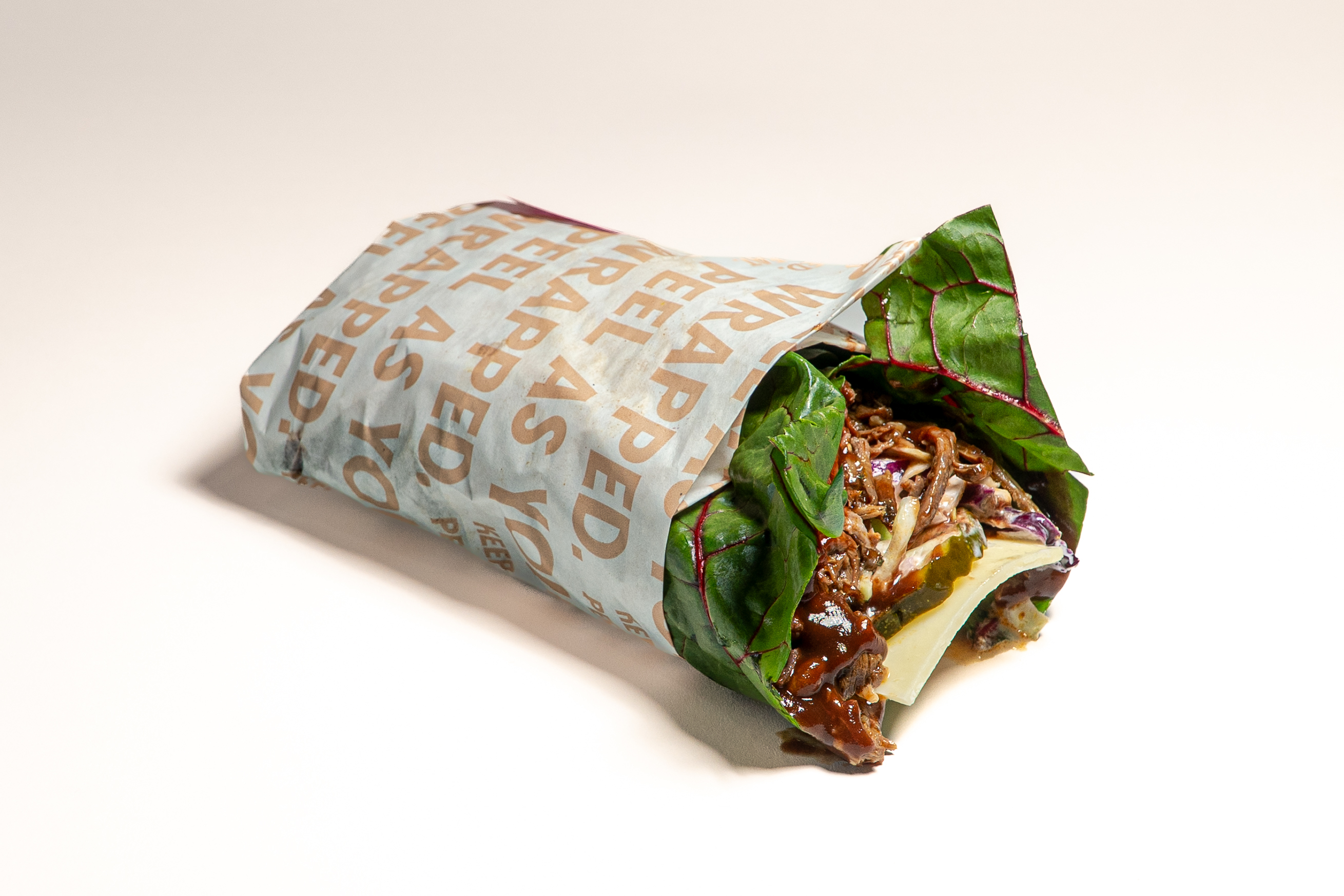
One-handed eating checklist for GLP-1 and dietary-restriction users:
- ✓ Fully gluten-free preparation environment
- ✓ Under 300 calories per serving
- ✓ 25+ g protein per serving
- ✓ Under 15 g net carbohydrates
- ✓ No utensils required
- ✓ Available via mobile order for zero wait time
Managing appetite suppression while hitting your protein target? Breadless locations offer the calorie-to-protein ratio your medication plan demands.
Sample 1,600-Calorie Workday Plan with Time Stamps
- 7:00 a.m. – Breakfast (400 cal, 30 g protein): 3 scrambled eggs, 1 cup Greek yogurt, black coffee. Prep: 10 minutes.
- 10:30 a.m. – Mid-morning snack (200 cal, 15 g protein): 1 oz almonds, 1 hard-boiled egg. No prep.
- 12:30 p.m. – Lunch (280 cal, 28 g protein): Breadless Jerk Chicken & Mango supergreen wrap. Mobile order pickup: 5 minutes.
- 3:30 p.m. – Afternoon snack (220 cal, 20 g protein): Cottage cheese with blueberries. Prep: 2 minutes.
- 7:00 p.m. – Dinner (500 cal, 40 g protein): Salmon fillet, roasted vegetables, side salad. Prep: 20 minutes.
Total: ~1,600 calories, ~133 g protein. The 12:30 p.m. Breadless wrap anchors this plan by covering the highest-risk crash window from 1–3 p.m. It does this with the lowest caloric spend of any meal in the day while still delivering the protein and fiber needed to sustain afternoon focus.
Conclusion: How Supergreen Wraps Meet Workday Demands
Three criteria determine whether a workday meal truly supports a high-performance professional: crash prevention through low-glycemic composition, portability for one-handed eating without utensils, and dietary fit for gluten-free, diabetic, and GLP-1 needs. Standard sandwiches fail the first criterion. Salads and bowls fail the second. Most fast-casual options fail the third by design.
The supergreen wrap format using the same nutrient-dense greens discussed earlier addresses all three at once. It removes the bread-driven insulin spike, converts a salad into a portable format, and delivers a naturally gluten-free meal under 300 calories with 25+ g of protein and under 15 g of net carbohydrates.
Find a Breadless location near you and experience a low calorie, high protein meal built for the way you actually work.
Frequently Asked Questions
What makes a meal “GLP-1 friendly” and how does Breadless qualify?
A GLP-1 friendly meal focuses on high protein density, low net carbohydrates, and low total calories in a small-volume format. GLP-1 medications suppress appetite significantly, so users often consume 800–1,200 calories per day. In that context, each meal must deliver strong protein and micronutrients per calorie to protect muscle and avoid deficiencies. Breadless qualifies because its supergreen wraps provide 25–30 g of protein in under 300 calories with under 15 g of net carbohydrates, using Swiss chard and collard greens as the vessel. These greens are rich in magnesium, potassium, and antioxidants. The entire menu is naturally gluten-free, and the format requires no utensils, which helps when appetite is low and time is tight.
Why do supergreens prevent the afternoon crash better than whole-grain bread?
The afternoon crash stems mainly from a rapid rise and fall in blood glucose after a high-glycemic meal. Whole-grain bread has a lower glycemic index than white bread but still triggers a clear insulin response because it remains a processed carbohydrate. Swiss chard and collard greens are unprocessed plant foods with negligible glycemic load. They add fiber that slows glucose absorption, magnesium that supports insulin sensitivity, and nitrates that improve blood circulation. Together, these factors support stable blood sugar over three to four hours. Using supergreens as the vessel removes the primary glycemic trigger from lunch without sacrificing protein or satiety.
Is Breadless actually safe for people with celiac disease, or is it just “gluten-free options”?
Breadless operates differently from restaurants that serve gluten-free items alongside bread-based products. Because no bread enters a Breadless kitchen at any point, the menu relies entirely on supergreen vessels. This removes the main source of gluten-containing flour that typically causes cross-contamination. That difference is critical for celiac disease management. A restaurant that makes sandwiches on bread and also offers a lettuce wrap cannot guarantee a gluten-free environment because flour particles circulate throughout the kitchen. Breadless removes that risk by design rather than by accommodation.
How does Breadless compare to meal prepping high-protein lunches at home?
Home meal prep with collard or Swiss chard wraps can match the macro profile of a Breadless meal at a lower per-meal cost. It also requires sourcing, washing, and preparing the greens. Breadless has systematized this process through a proprietary handling method that creates a durable, non-soggy vessel. The main advantage for busy professionals is the removal of prep time, combined with mobile ordering that keeps pickup under five minutes. For professionals working 50+ hours per week, the time cost of daily meal prep often exceeds the price difference. Both approaches work; the choice depends on how each person values their time outside work.
Can Breadless meals fit into a structured weight management or calorie-deficit plan?
Breadless meals fit cleanly into structured weight management plans. The Breadless Jerk Chicken & Mango wrap at 280 calories and 28 g of protein offers one of the most efficient calorie-to-protein ratios in fast casual dining. In a 1,400–1,600 calorie daily target, a single Breadless wrap at lunch uses less than 20% of the daily caloric budget while providing roughly 20–25% of a typical daily protein goal. The low net carbohydrate count of 13 g supports ketogenic, low-carb, and diabetic meal plans. High fiber from the supergreen vessel improves satiety and lowers the chance of afternoon snacking that often undermines calorie-deficit adherence.